There’s nothing worse than turning on the tap to run a nice hot bath…and realising there’s no hot water but not knowing why! Unfortunately, this is a common issue that people face day to day. However, it’s usually a simple fix for a heating engineer.
Having no hot water interrupts daily routines, so it’s important that it’s sorted quickly. In this blog, we’re going to talk about common reasons your hot water might not be working properly, and when the best time to call a heating and gas safe engineer is.
If you have any questions about problems with your heating, get in touch with our expert team.
What Are the Most Common Causes of No Hot Water?
Boiler Faults
If your boiler isn’t working properly, it’s one of the most common reasons for no hot water. This could be due to a fault code, a recent shutdown, or general wear and tear.
Low Boiler Pressure
Low pressure can stop your system from producing hot water. Most boilers should sit around 1–1.5 bar; anything lower may need topping up.
Thermostat Issues
If your thermostat is set incorrectly or not working, your system may not heat water as expected. Remember to check your boiler settings!
Power or Gas Supply Problems
No power or gas means your boiler won’t be able to heat water at all. This could be as simple as a tripped fuse or an issue with your supply.
Frozen Pipes or Blocked Pipes
In colder months, condensate pipes can freeze, causing your boiler to stop working and cutting off hot water.
Faulty Internal Components
Parts like the diverter valve, heating element, or pump can fail over time, preventing hot water from reaching your taps.
Pilot Light
In older boilers that use gas to heat water, there is a pilot light. This ignites the gas burner so that it heats the water. If this light goes out, the boiler cannot function properly and will affect your hot water supply.
Leaking Pipes
Leaking pipes can disrupt your hot water supply and may also lead to low water pressure in your system. Even small leaks can affect how efficiently your boiler works, and over time, they can cause more serious damage.
Power Supply to the Boiler
If your boiler isn’t receiving power, it won’t be able to heat your water. This can happen after a power cut or if something has tripped at your fuse box or circuit breaker.
Why Is My Central Heating Working but Not My Hot Water?
You might wonder why you have heating, but no hot water! If you have a combi boiler, the diverter valve decides where the heat goes. A faulty diverter valve might send heat to one and not the other!
Getting boiler settings right can be tricky, and sometimes, your settings for hot water may be turned off or too low, meaning the boiler is not able to heat water properly. This could also be similar if you have a thermostat that isn’t set properly.
If the pressure is too low, your boiler may struggle to produce hot water even if the heating still works.
Simple Things You Can Check First
Check your boiler pressure
Look at the pressure gauge on your boiler. If it’s below 1 bar, your system may need repressurising using the filling loop.
Make sure your thermostat is set correctly
Double-check your thermostat settings and hot water temperature control to ensure everything is turned on and set high enough.
Check the power supply
Make sure your boiler is switched on and hasn’t tripped at the fuse box or circuit breaker, especially after a power cut.
Check your gas supply & electricity supply
If you have a gas boiler, check whether other gas appliances in your home are working. If they’re not, there may be an issue with your gas supply. You should also make sure your boiler has power and hasn’t tripped at the fuse box or circuit breaker.
Reset your boiler settings
Many modern boilers have a reset button that can fix minor faults. Check your boiler control panel or manual before doing this.
Look for error codes or warning lights
Your boiler’s display panel may show error codes that indicate what the problem is.
Check for frozen pipes
In cold weather, the boiler’s condensate pipe can freeze and stop your system from working.
Make sure nothing has been accidentally turned off
It sounds simple, but settings, timers, or isolation valves can sometimes be switched off without realising.
When Should You Call a Heating Engineer?
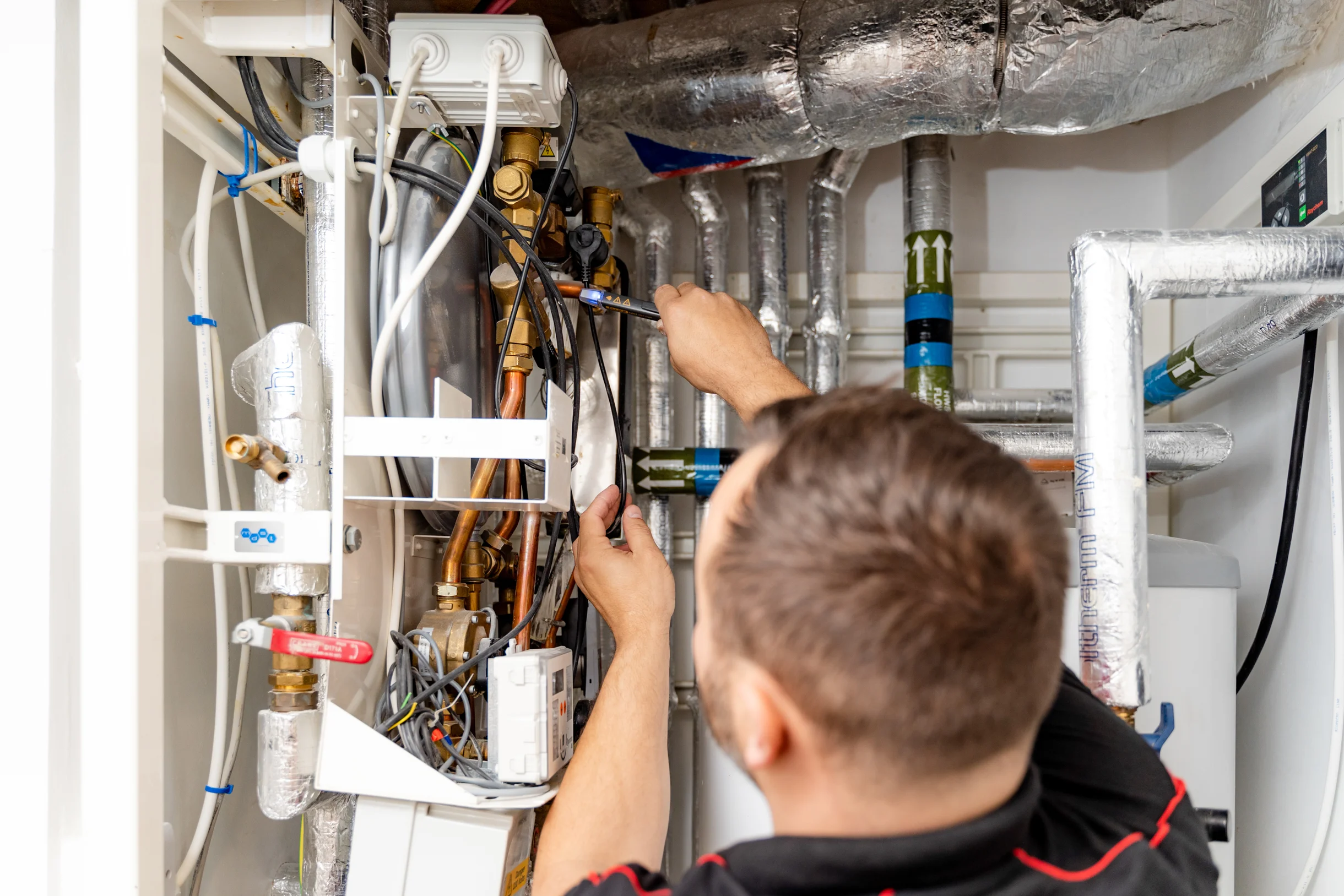
If you’ve gone through the basic checks and are having no luck, it’s time to call a heating engineer. Ongoing issues like losing pressure and error codes can point to a deeper fault, so it’s always worth seeking professional advice.
You should also seek professional help if you suspect a faulty part, such as the diverter valve or pump, or if you notice leaks, unusual noises, or water around the boiler unit.
If the problem keeps returning after resetting the system, or you’re unsure what the issue is, it’s always safest to contact a Gas Safe registered engineer to diagnose and fix the problem properly.